Monday, March 14, 2022

BOOKWORMS AND LIBRARIES

 “Harry — I think I've just understood something! I've got to go to the library!”

And she sprinted away, up the stairs.

“But why’s she got to go to the library?”

“Because that’s what Hermione does,” said Ron, shrugging. “When in doubt, go to the library.”

 And if you can’t place this quotation, don’t read any further!

Talking about libraries, a la https://sureshsubrahmanyan.blog/2022/03/13/booked-for-life/, we too in Chennai in the 70s and 80s were graced with the British Council and USIS. Yes, the cool air was most welcome but so were the hours of leisure, of selecting and checking out books.
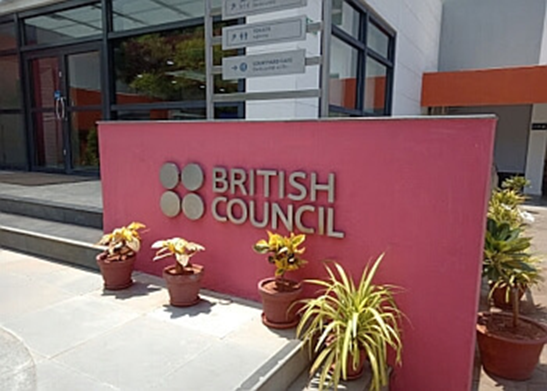

We could only check out four books at the time from the BC, and that was not sufficient to keep us going for any length of time. We could borrow cards from others who were not such avid readers but the staff knew me personally and there was no way I could take on another identity. Ms. Sivagami was in fact the sister of my chemistry prof. I dreaded to think of the tales she would carry back of any such shenanigans and the ensuing ‘shelling’: You have sullied the name of our respected institution! On special occasions, such as drama competitions, I did appeal to the better nature of Ms. Sivagami but had to carefully lay the ground for my unusual request.

So we spent hours in the library reading. It was a pleasure to be surrounded by books which had seen a lot of wear and tear but were carefully maintained. Copying down copious notes on literary criticism which I could never recall during the exams. Whispered conversations with friends from other colleges I would see only at the BC library. Sharing stories about which novel we were discussing in our respective classes. Getting tips on exact dates  of when favoured or needed book would be returned for a convenient checkout.

Library visits once through the week was just about doable and as far as possible combined with another event such as a play or film on the premises. However, these weekdays dropins were usually a rushed affair since the closing time was 7.00 pm and we didn’t get off from college till the co-curricular debates or play rehearsals got done at 5.30 or 6.00. Saturdays would see us bright and early in the library, after a heavy brunch to keep us going for the day.

In the main library room, the tables were too high and the paired chairs too straight-backed for comfort. Sitting on the low stools provided in the racks was a convenient when browsing the shelves. But to actually sit and read for hours required me to be there early enough to stake a claim to a chair in the corner facing the wall to afford privacy, stealthily tucking my feet under me, out of sight of the staff and not distracted by non-readers who came in to escape the heat and humidity.

A major attraction was the anteroom, revealed only to diehard readers. It was a crowded room with a couple of desks piled high with books and paper, usually unoccupied since the staff was busy in the main library hall. It was furnished with a couple of chairs along the wall, much more comfortable and private than the main room. There they were, rows and rows of Samuel French playscripts. Slim editions on fragile paper which was already yellowing. The Mouse Trap – my first introduction to Agatha Christie the playwright, familiar to me only through her Poirot and Miss Marple novels. My first dramatized version of Dickens’ Christmas Carol. Conan Doyle wrote plays? I never would have known, except for the French collection. 


A couple of months before the intercollegiate or intracollegiate drama competitions, I would spend hours combing through the French collection for suitable one-act plays. The helpful staff would sneakily hold them for our second reader. Once she and I had narrowed it down to the top two or three, we were allowed to check them for a final decision by the larger panel back in the college, a very special privilege indeed.

Years later, when I recalled a particular anthology of one-act plays for a school production, I went back to the library. I was very disappointed that the book was not on the shelf, had, in fact, been withdrawn. Most of the old guard had retired and I wasn’t sure how my weird request for publications details of an ancient book would be received but the newer staff was just as friendly and helpful and dug out the anthology from the anteroom where it had been consigned to a Discard pile. The staff smiled indulgently when I jumped on it with mewling cries of pleasure, eventually donating it to my school library.

It was the film events at the USIS which were a great attraction for me, not the library. The staff was as polite but the book collection left much to be desired and the layout was not conducive to reading. I should also probably confess that my literary tastes ran more to British than American literature, The Razor’s Edge and Kingsley Amis rather than The Bluest Eye and Norman Mailer.

I wonder if I should go back and check out Herman Wouk’s Winds of War before I watch the series now? But even just gaining entrance into the library now is such a pain…


Sunday, January 5, 2020

T&L Music and Language: I Perform, So I Should Be


Teachers are often likened to actors, they are said to ‘perform’ in front of students in their classes, which is a contentious statement when we examine their belief systems. (Another topic for another post.)

Arts and language teachers can ‘perform’ their content. Music is undoubtedly a performance art, with a public stage and an audience preset in its framework. Music teachers have opportunities to listen to and perform their content outside of the professional development sessions offered by their schools. Both TV and the AIR broadcast classical music programs. Music festivals are not uncommon in most cities; every temple in Chennai seems to celebrate every festival with Carnatic music. It is not an onerous exercise, either, for music teachers to gather with other like-minded professional and amateur musicians for an evening of music, one that doesn't require the elaborate preparation of a theatrical production.
And what about those who learn music but don’t take it up professionally? We are relegated to the category of singers, players or scholars of music, whether we perform in the bathroom or to select audiences composed of indulgent friends and family. (Shades of golu evenings? 😊)

Language teachers, by and large, don't engage with their content, the language or literature, once they leave their workplace. Of course, most may converse in English but much of their speaking is a mixture of the regional language and English with frequent  code switching, Tanglish, Hinglish or such like.
Listening to English? Yes, if we watch serials or movies in English. Many teachers’ homes may have a subscription to Netflix or Amazon Prime. But like the teachers said (see T&L Music and Language- I Teach, So I Am), most of them are too busy with household or family tasks in the evenings to consistently make time to listen to English-based programs. English theatre in most cities is non-existent or confined to an elite audience which does not include teachers of English for sure!
Reading? Most are not voracious readers, a few may claim to be readers of potboilers, newspapers or magazines. How many buy books regularly? How many of them have bookshelves at home that are in constant use? How many can name prize winning novelists or poets of the past ten years? Or have read their works?
As for writing, don’t even go there. Very few, if any at all, indulge in writing beyond official or personal communication. A very few, a handful, may be invited by private publishing companies or the states to author books or be part of a curriculum/book writing group.
Other writings that reach the public spaces? More likely to be authored by regional language teachers. However, schools rarely, if ever, acknowledge or showcase their writings at public or school-wide events. Perhaps the greatest extent of it when they author the plays presented at school annual days and write out scripts for the student emcees, though many of these are now written by students themselves. It is not surprising that most colleagues and students remain unaware of the ‘performance’ aspect of their language teachers.
I have been fortunate to have known three of them at P.S. Senior Secondary School, Chennai.  Vasanthakumari writes poetry in Tamil and often presents it on occasions such as an alumni meet of her school. Bhagavathy is more involved publicly with her writing. Her work is published and she is involved with the Tamil writers’ communities and events in Chennai.
P. Geeta, the Hindi teacher, wrote short stories, poems and essays. The first time I read any of it was a book her children published privately just before her death a few months ago. They assembled her writings from years ago and pieces she wrote while facing death from cancer with remarkable calmness and fortitude. 

So how can language teachers, who are not gifted writers, engage with their content outside school? With a little planning, and a lot of willingness.
  • Play parlour games like charades or word building or board games like Scrabble in their homes or at dinner parties. This requires neither major preparation nor additional space. Yet this rarely happens. Perhaps because it smacks too much of organising activities in a classroom?
  • Read books for free at Bookmark openlibrary.org and at Gutenberg.org.
  • Know where the closest lending library is and patronize it.
  • Carve out a tiny bit in the house budget for books, it is a legitimate professional expense re taxes. Bookmark Amazon.in or flipkart.com. And buy books, for your children’s birthdays and all festivals. Buy books for your friends’ children’s birthdays and all festivals. And read every one of them before gifting it.
  • Set time aside every week to watch programmes in English. Watch Queen in English rather Tamil, perhaps. Follow (maybe not binge watch) English language serials at online sites.

Happy watching! Even happier reading!!

********************************************************************

By Mrs. Vasanthakumari Manoharan (December 2019)


*****************************************************************************

Excerpts from P. Geeta. (2019). The Little Book for Love & Gratitude


Wednesday, January 1, 2020

T&L Music&Language: I Teach, So I Am

A Subject teacher complained vociferously about Arts teachers at a meeting.
“They don't know history, philosophy or pedagogy of education, “ she said. “we can't talk to them about anything related to our classroom or students. All day long they sing or sit around listening to songs.  They don't do anything. ”
There was a profound, deadly, uncomfortable silence. The forty or so Subject teachers looked down at the floor with small, uneasy smiles. They obviously agreed with the statement but didn't want to be associated with voicing it.
The much fewer Arts teachers looked around timidly. Except one male teacher. He gazed off into the distance as though he was not in the room, not at all concerned with the proceedings.
The facilitator let the moment sit and made no attempt to move the discussion in any direction.
After almost three minutes, the male Music teacher stood up.
“What do you do when you go home after school?” he asked the room in general.
“We have so much work,” the initial complainant said indignantly. “We cook, look after the family, we clean, we visit family and friends. There is so much work at home,”
“When I go home, I do what I do in school, “ said the male Music teacher simply. 
And sat down quietly.
Another silence reigned, another profound, deadly, uncomfortable silence. 
But he had made his point. 
And everyone knew it.

True, true, I grant you freely. A Female Music teacher may not claim so blithely to spend her afterschool time on music. She would probably recognize the responsibilities and activities her colleague listed!

But considering the point the Male Music teacher made, how do teachers spend their non-classroom time on their own learning? Continuous Professional Development is a mandated and recognized activity for teachers in schools. However, there are severe limitations to these programs which focus on learning to teach, traditionally focusing on updating subject content of what to teach and increasingly on pedagogy of how to teach. This is aimed at the teacher practitioner who functions in a classroom where the focus is on teaching students.

What about the performance aspect to Arts and Language teachers, which is hardly addressed? In what ways are teachers performers? What are the forums and stages available to them? How well and how much do they access these spaces?

Bear with me;
… I must pause till it come back to me.
(Can you place this quote, and complete it – without googling it?)

Sunday, December 29, 2019

T&L Music and Language - Here, There... Where?


Upstairs, downstairs, in my lady's chamber...
The contexts in which private music classes for beginners are held and a school classroom are surprisingly similar in certain ways.

Anyone who has studied in an Indian school is familiar with how classrooms look and classes function. With no change over 60 years that I remember. (That dates me, eh?) About 40 students at least squashed into a room meant for half that number. Desks in straight rows, facing up front. The aisles too narrow for an average teacher to walk to the back of the class. Or for students from Row 3 to approach the teacher. So any movement is confined to the teacher oscillating in the narrow strip of space between the board and Row 1. So students through the day see a succession of teachers and the uninformative backs of their classmates' heads. The room is bare with no charts or posters on the walls.
More progressive schools may have round tables with chairs in the kindergarten and perhaps even in Grades 1 and 2. But by upper elementary the teacher is expected to be the focus of all students’ attention and we are back to serried states of desks and chairs. Some teachers may put up student work on the walls but most have artistic work done by teachers. Still, some colour in the room to feed the aesthetics of students.

What do music classes look like? In my salad days, the music teacher came home. The classes were one-on-one and were held in a secluded room just off the main part of the house. Both teacher and student sat on the floor with the harmonium between them. I remember my first teacher Soundaram mami easily able to lean over to keep rhythm on my thigh quite forcefully. No frills, at least no more than the room always did. My grandmother always kept an ear open to the doings in the class though she did not sit in on the class.

Much has changed since then. No more individual classes. By and large, they are small group classes of 3 to 10. Students assemble in the teacher’s house. It is usually crowded with little wiggle room. Students usually still sit on the floor. 
The teacher may or may not, depending their age and physical limberness. There is still not much to indicate that this a room devoted to music. Maybe a thamboora in a corner. No bookshelves with music books or pictures of musicians and composers. Parents who hang around waiting to collect their child are discouraged from sitting in on the class but urged to socialise in another room.  

So two or three times a week students essentially go after 6 hours in a regimented, unaesthetic environment of their classroom to another closed, confined room for 30 to 45 minutes, which may be more homely. Getting to look more and more a regular classroom, isn't it?

Music teachers moan that fewer young people are interested in classical music, that they have neither the patience nor the time to invest in learning it. Well, if it is an extension of school, why would students be enthused about it?
Private music teachers are also heard to chastise children with, ‘Would you behave like this in school?’
No, probably not.
But why would you want children to relate back to school, where they have just spent 6 hours, and are longing for something different? And being one of 40 in a larger group of 2000 to 5000 is not what a child would want to repeat through the evenings or weekends.

So how can music classes look and feel differently from school? More like music and less like English or Hindi? Remember that music classes are not school classes, I guess. Music is primarily an aesthetic experience. Cater to it. Allow students to express themselves freely.

Dress! In a music class, we can see children dressed in anything from shorts to flowing skirts to pavadais. It adds colour and vibrance to the room, and it will change the mood of the child. A far cry from the constricting and unimaginative uniforms prescribed by most schools. If anything, discourage children from wearing their school uniforms to music class. A young friend recounts a tale of an established and very well-respected teacher who threw him out of her class because he showed up in shorts. I understand the respect for tradition but can we focus on the joy that music should bring?
Brighten up the room with pictures of musicians and composers, easily available in calendars and flyers, and on the web.
Encourage students to socialize before and after class. Forming friendships will keep children attending music classes long after the pull of the art has faded away.

Schools are institutions with a specific role in the larger society. Private music classes do not have to seek to replicate that purpose or process to justify their existence. Children need different learning contexts, not the same ones twice over…. Hmm, need to explore this more in another post.

Image: https://musicacademymadras.in/academics/part-time-classes/

Thursday, December 19, 2019

T&L Music and Language - Music, Language and Me

Meri aukat kya hai? What is my arugadai? How am I qualified to write about teaching and learning, both music and language? A fair question.

The latter is easy to establish. I have taught English and education  for over 40 years in four countries across three continents. I have published and edited about 85 books, chapters and articles, made 120 presentations, and conducted over 50 workshops for teachers. Most recently, I edited an English language textbook series, and co-authored 20 of the 32 books, published by Indiannica Learning. Google me if you want to test the veracity of my claims. Go on, feed my ego😑

My musical experience is both by heritage and as a student. I grew up in a family of dyed-in-the-wool Carnatic musicians. I grew up waking to and going to sleep with music, and dissections and analyses of music and concerts in the inbetween hours. 
My grandfather T.V. Rajagopal was a scholar of music and served as a Secretary of the prestigious Madras Music Academy and its music college for decades. My grandmother Rukmini Rajagopal and various aunts and cousins in the immediate and extended families were, and are, well-respected performers as well as A grade AIR artistes. Both my grandmother and my mother Indira Ramanathan taught music formally for 35 years of their lives. In fact, my grandmother was awarded the prestigious Sangeeta Kala Acharya award by the aforementioned prestigious Madras Music Academy. No, I am not mocking the MMA (well, may be just a tiny bit) but more seeking to establish the distinction of my musical heritage. I am not claiming any special cachet for this heritage but the cultural capital it bestows on me is considerable and I am merely acknowledging the reality of it. And the impact of cultural capital is incontrovertible as much as it is unrecognized.

As for my personal experience with music, like most South Indian brahmins girls, I had music classes ‘inflicted’ on me from the age of 4 or 5. I formally studied music under four different teachers in the early years. In my adulthood I saw the value of music and studied a few years with my grandmother and two years with the illustrious M.L.Vasanthakumari. I am a regular attendee of the music season in Chennai,  and have been  for 40 years, since I was a child, with a hiatus of about 20 years.

Music is in my blood. I love it. I am an enthusiast. I respond to it viscerally. I choose different kinds to mediate and influence my moods.

But I am not in any way, shape or form an expert, not even close. I cannot and will not identify ragas or match composers and compositions. I am flummoxed by complicated calculations and rhythms of talas. I refuse to dissect and analyse concerts. I have perfected the art of forgetting the contents of a concert the minute I walk out of the auditorium.

So for my comments and descriptions of music pedagogy I will rely on my own expertise of the art and science of teaching and learning. I will also call upon my extensive and continuing conversations and dialogues with teachers and students of Carnatic music.

If you feel I am overstepping my bounds, feel free to point it as gently or forcefully as you like . I promise not to block you - unless you overstep bounds of decency!

Oh, and the three links (hold down the text in green):
- A speech by my grandfather
- A viruttam by my grandmother
- A blog about my grandmother by her student, Sanjay Subrahmanyan


Wednesday, December 18, 2019

Teaching and Learning (T&L): The Arts and the Languages

In April of this year, CBSE, the most influential examination board in India, released a handbook in support of its effort to promote Arts Integrated Learning. An approach after my own heart, it has been in the forefront of my mind.
 One of the underlying requirements  for Arts Integrated Learning to succeed is team work. Subject teachers and Arts teachers (to distinguish between the two, not that the Arts are not subjects, too) will have to communicate with each other. As of now, though they may be on the rolls of the same schools,  these two categories of teachers inhabit two different universes. While Arts teachers may have some experience of how Subject teachers acquired their content knowledge, most Subject teacher have never learnt the Arts formally and may be unaware of the context, condition, content and pedagogical implications of an Arts education. If they don't know where each of them is coming from,  how can they build trust or respect? Understanding how the Arts are learnt by Arts teachers will expand the horizons of pedagogical practices in schools.
This gap in information needs to be filled. To do this, effectively,  as a teacher Educator I need to understand the learning experience of Arts teachers better.
I'm beginning with music.
Why music?
Music is said to be a language that cuts across languages. Sounds like a conundrum but I am sure all of you know what that means. That music is expressive, communicates thoughts and emotions. It is an art, like language, highly personal, and elicits subjective responses. Its grammar 😱 is very complicated which takes years to master. People use musical language with varying levels of expertise in it. And yet it draws people together and builds communities of performers, audiences and administrators.
Also, ‘tis the season of good cheer. And lots and lots of music. It is December and the music season is on in Chennai. For four weeks about 50 sabhas organize about 1500 concerts by over 600 musicians and dancers. So I will be immersed in all things music. South Indian classical Carnatic music. I will listen, listen again and listen some more. I will also haunt the canteens and gorge food that makes my NRI friends sigh nostalgically.
And as I sit in the hall with waves of music washing over me, I think. I think about who the musicians are, where they learn and who from and  their musical lineage. I wonder about how the teachers teach, the context in which they teach, the content, the pedagogy. How is music actually taught? What is the most common pedagogy of music? How does it differ between teaching novices and more advanced students? How much and in what ways do music teachers consider the psychological and developmental profiles of their students? And I think about what this means for education in schools as we know it.
Thinking about all this leads me naturally to write about it. Not with the rigor and social science-y writing I am accustomed to.  But to resurrect my moribund blog. Blog a series of short articles on different articles every three or four days.
The scope of the series will focus on South Indian Carnatic music and novice learners. The topics will range from the contexts of private music class, content, description of learners and pedagogical approaches. Each post will also compare teaching and learning music to English in schools.
Feel free to point out misconceptions, highlight concepts and ideas I have glossed over and add your perspectives and experiences. And feel free to share on social media and with friends. I look forward to moments of clarification and instances of deep learning from this process.

Thursday, September 5, 2019

IT’S TEACHERS DAY (not Coach/Guide/Mentor day)


Sept. 5 – Teachers Day in India – is about teaching, not about learning. It is the one day that should be dedicated to Teachers, not to learners. It should be a recognition of what teachers do for 30 years of their lives, five or six days of the week. It should be an acknowledgement of what it takes to be a teacher with a class of 30 students or thereabouts, on a conservative average.
That day should be dedicated not to learners from but to those who teach us whether we want to learn or not. We may learn from all guides, mentors and coaches - but they are not Teachers. All teachers may be coaches, guides and mentors (CGM) but the reverse is not true.
Is there really a difference? You bet there is!
Context: Teachers work in the formal sector, in institutions called students and colleges which are strictly regulated and accountable to various stakeholders. CGM work in non-formal sectors. Schools are public service institutions, regularly inspected by boards of education, often written about in the press, and open to being challenged by parents and the public. Contrarily, coaching classes may be structured and run like clockwork but they make up their own rules and set their own standards, accountable to no one except their own internal administration. If parents complained about them, the wards (to distinguish them from their role as students) would be shown the door! Guides and mentors, of course, function in the personal space, where formality of any kind is absent.
Professionalism: Teachers are professionals, unlike guides and mentors. They are appointed based on formal credentials, which may be true of some coaches. Teachers qualify themselves through formal teacher education programs, passing exams, having pieces of paper that guarantee that they have the requisite education. On the other hand, CGM’s credibility is based on their experiences. They must have played their sport at competitive levels and have name-recognition, or served in positions of note in relevant organizations. Vastly different professional profiles, right?
Selectivity: Schools may have entrance exams and interviews for students and parents. But once they are given admission, teachers don’t have a choice of who they will have in their classrooms. The rosters are made for them and they have to deal with the numbers and personalities in their classes. The matching of CGM to their wards, on the other hand, is usually a choice made by both. Mentors especially have a choice of who they will and will not mentor. The what, how and when of CGM-mentee meetings is usually defined by the CGM, perhaps in consultation with the mentees while teachers increasingly have little control over the curriculum, content and pedagogy. Mentors may decide to take a walk along the beach with their mentee on a fine day; teachers have to fill out multiple forms in triplicate days and weeks in advance for a field trip, if such a thing is ever part of the curriculum.
Expectations: Students, parents, and the society at large, have high (sometimes unrealistic?) expectations of teachers. Teachers are then held accountable for their own and their students’ performances. When these benchmarks are not met, all the stakeholders feel free to air their disappointment and anger in public, loudly and clearly. Teachers are not allowed to have reciprocal expectations of parents, and cannot expect parents to take a child to a museum or ensuring that the child is adequately nourished. On the contrary, when a child does not win a tennis tournament, the coach is not blamed but is paid more to offer more intensive, individualized sessions. Mentors and guides, of course, are exempt from any accountability since they do it out of the goodness of their hearts!
Motivation: All of the above have a huge impact on the motivation of wards and students. Wards are in the coaching and training program or mentoring relationship because they choose to be. The topic is of interest to them and they trust the CGM. Students, on the other hand, attend school because they are forced to and study subjects they have no interest in. Motivation is thus built into CGM interactions while teachers have to swim against the tide of student disinterest and begin with a built-in disadvantage. Further, guides and mentors function in a one-on-one setting where building trust and confidence is much easier and less stressful, while a teacher has 25 to 90 students. Not quite an even playing field, is it?
What does any of this have to do with Teachers Day in India? We learn from many people, at different points in our lives. By all means, respect and honour your coach, guide and mentor. But on Sept. 5 could you honour your teachers, and only your teachers, and not conflate them with your coach, guide or mentor? One day, just that one day, let teachers be remembered for who they are and what they do, not who we are and how we learn. Maybe then we will begin to understand and respect how much we expect of teachers, and value what they truly being to our lives.